Glass Frogs

Glass Frogs
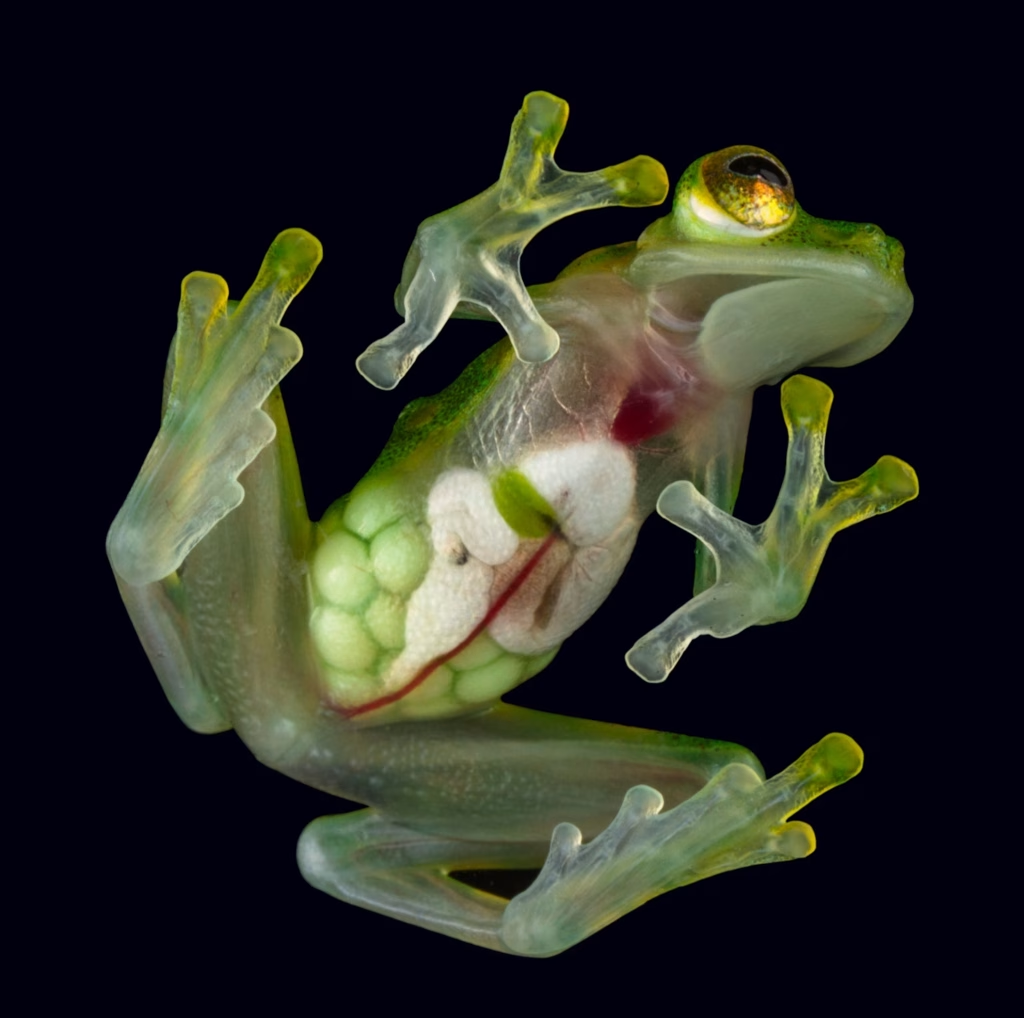
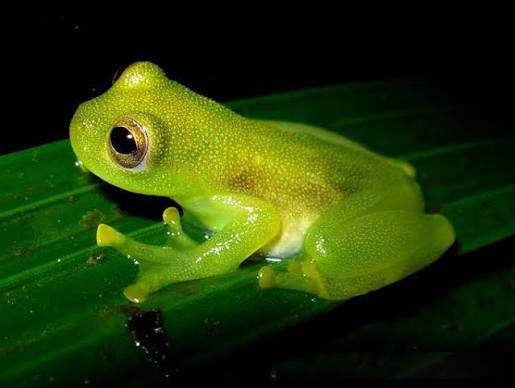
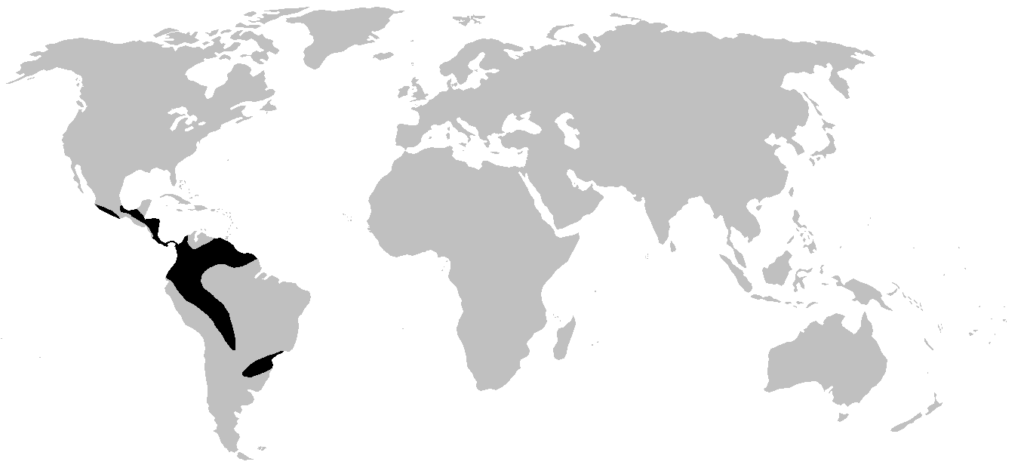
The glass frogs belong to the amphibian family Centrolenidae (order Anura), native to the Central American and Colombian rainforests. The general background coloration of most glass frogs is primarily lime green, the abdominal skin of some members of this family is transparent and translucent, giving the glass frog its common name. The internal viscera, including the heart, liver, and gastrointestinal tract, are visible through the skin. When active, their blood makes them visible; when sleeping, most of the blood is concealed in the liver, hiding them.[1] Glass frogs are arboreal, living mainly in trees, feeding on small insects and only coming out for mating season. Their transparency conceals them very effectively when sleeping on a green leaf, as they habitually do.[2] However, climate change and habitat fragmentation have been threatening the survival rates of the family.
The first described species of the Centrolenidae was the “giant” Centrolene geckoideum, named by Marcos Jiménez de la Espada in 1872, based on a specimen collected in northeastern Ecuador. Several species were described in subsequent years by different herpetologists (including G. A. Boulenger, G. K. Noble, and E. H. Taylor), but usually placed together with the tree frogs in the genera Hylella or Hyla.
The family Centrolenidae was proposed by Edward H. Taylor in 1945. Between the 1950s and 1970s, most species of glass frogs were known from Central America, particularly from Costa Rica and Panama, where Taylor, Julia F., and Jay M. Savage extensively worked, and just a few species were known to occur in South America. In 1973, John D. Lynch and William E. Duellman published a large revision of the glass frogs from Ecuador, showing the species richness of the Centrolenidae was particularly concentrated in the Andes. Later contributions by authors such as Juan Rivero, Savage, Duellman, JLynch, Pedro Ruiz-Carranza, and José Ayarzagüena increased the number of described taxa, especially from Central America, Venezuela, Colombia, Ecuador, and Peru.
The evolutionary relationships, biogeography, and character evolution of the Centrolenidae were discussed by Guayasamin et al. (2008[3]) Glass frogs originated in South America and dispersed multiple times into Central America. Characteristics evolution seems to be complex, with multiple gains and/or losses of humeral spines, reduced hand webbing, and complete ventral transparency. Researched by Santiago (2009),[4] evolution and speciation on glass frogs has shown that ecological gradient and isolation have a role in speciation and divergence in glass frogs by comparing glass frogs Mitochondrial DNA. Glass frogs have expanded from the Guiana shield to other rainforests and diversified further. They evolved to be able to survive and fit in with their environments.
(Credit to https://en.wikipedia.org/wiki/Glass_frog)